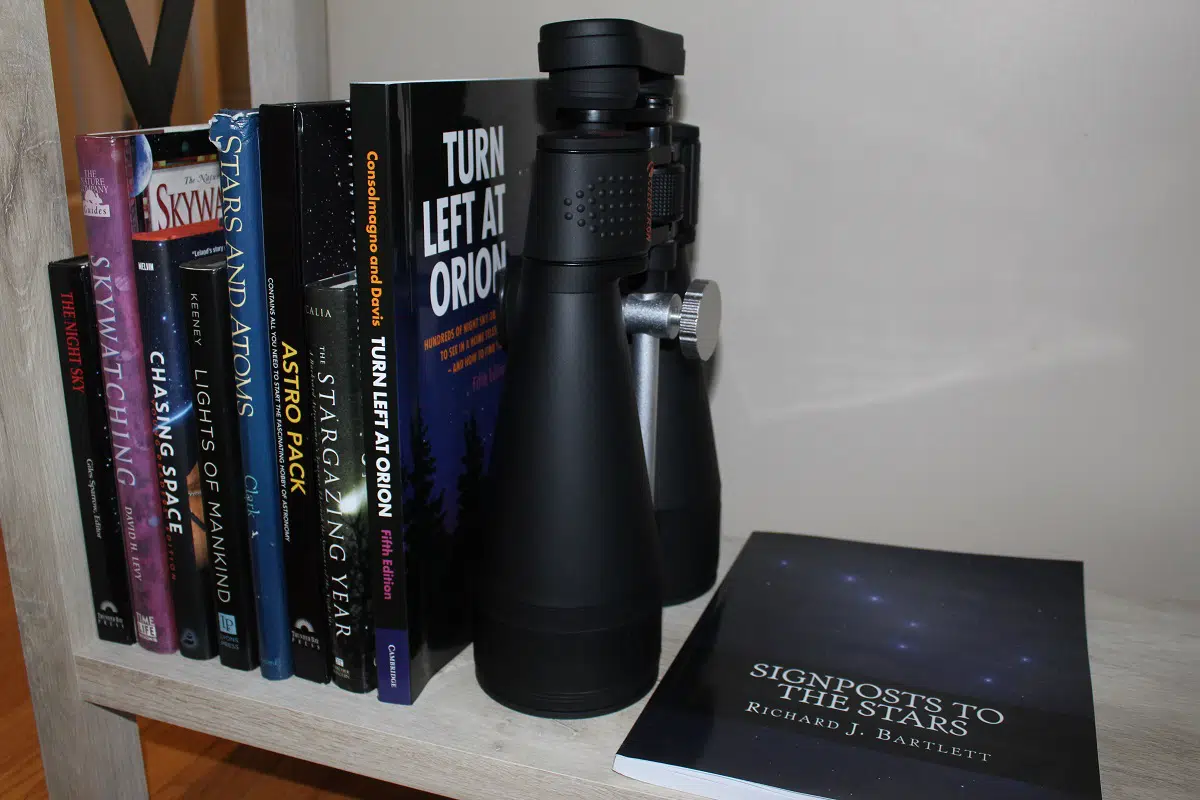
Looking for the best refractor telescope? Confused by all the options in the market? “Refracting” telescopes represent the oldest and most enduring telescope design for stargazing. They can be perfect for deep-sky, planetary, lunar, and astrophotography use. In this article, we’ll share with you our picks for the top 10 best refractor telescopes. To help save you time, we’ve done the research to provide you a solid line-up of options to fit your needs and budget.
See also:
Refractor telescopes are what most people imagine when they think about telescopes. They usually appear long and narrow. And, they gather light using an objective lens combined with an eyepiece. This allows the user to see a bright, clear, magnified image well beyond what’s possible with the naked eye.
However, as you’ll see in this article, they come in all shapes and sizes. And, there is a huge variety of options at different price points and levels of quality. Keep reading to learn more. We’re sure there is a refractor here that’s perfect for you!
(Before we begin, please note that product pricing, price categories and availability are accurate as of the date of this post, but are subject to change. This post represents the author’s opinion, based on research and experience, of the “best” or “top” telescopes in this category; the opinions of others may vary.)
Top 10 Best Refractor Telescopes
1. Sky-Watcher EvoStar 100mm APO Doublet Refractor Telescope

Our pick for best value apochromatic (APO) refractor – for stunning image quality. The Sky-Watcher EvoStar 100mm APO is one of the best value apochromatic refractor telescopes. It produces amazing images that are bright, sharp, and true to color. Its 100mm apochromatic objective lens employs the finest quality, extra-low dispersion glass with proprietary coatings – allowing accurate color and astonishingly clear images. It provides professional-level imaging experiences whether you’re a seasoned astronomer or an intermediate beginner looking to take your hobby to the next level. (Note: If you have a higher budget, there is also a 120mm version of this same telescope offering 44% more brightness.)
Scorecard – Sky-Watcher EvoStar 100mm APO
| Category | Our Verdict | Why? |
|---|---|---|
| Skill Level | Intermediate | For intermediate to advanced users |
| Quality | 5 out of 5 | Superb quality |
| Ease of Use | 4 out of 5 | Easy and fast setup |
| Power & Clarity | 5 out of 5 | Bright & clear, no false color, high magnification ability |
| Control | 4 out of 5 | Precise focusing (Note: Mount is purchased separately |
| Portability | 5 out of 5 | Light-weight tube (8.4 lbs.) and foam-lined hard case |
| Accessories | 4 out of 5 | High-quality accessories (Note: Mount is purchased separately) |
| Overall Value | 5 out of 5 | Great value |
Why We Like It
The EvoStar 100mm APO refracting telescope (where APO is short for apochromatic) offers excellent brightness and image quality with a number of advanced optical features.
First, the 100mm objective lens is large enough to gather a ton of light compared to most refracting telescopes – producing bright and clear images. (Remember, the aperture’s light collection ability is the function of the square of its diameter. So, a 100mm aperture is 56% brighter than a 80mm aperture in terms of the amount of light gathered.)
Second, the EvoStar employs an apochromatic “matched doublet” lens employing sophisticated (and proprietary) lens matching technology and coatings to deliver an image that virtually eliminates chromatic aberration – delivering crisp, sharp, and true-to-color images. Combined with its wide aperture, the optical performance of the EvoStar’s objective lens is incredible. It provides beautiful, high-definition images that are perfect for astrophotography.
Beyond the optical performance, the quality of this telescope is apparent in every detail. For example, the focuser is a 10:1 dual-speed Crayford-style focuser, which makes it super easy and fast to achieve perfect focus after you’ve sighted your target. The telescope is made from high-quality, durable materials, with a metallic finish that feels great to the touch. Also, it comes with high-quality essential accessories, including a 8×50 Right Angle Correct Image (RACI) Finder Scope, 2” dielectric diagonal, 1.25” Adapter, and two LET eyepieces (5mm and 20mm).
NOTE: This telescope does not come with a mount or a tripod. (You can purchase that separately. One good option is the Celestron CG-4.) Mounting rings and a V-style dovetail are included.
Pros
- Image quality is unsurpassed in this category – ideal for astrophotography
- Super light-weight at 8.4 lbs. and includes a hard case with foam lining
- Dual-speed focuser
- Powerful magnification (36x to 180x) with the included eyepieces
- 2 year limited warranty
Cons
- Mount and tripod purchased separately
Recommended Accessories
Click here to expand- Celestron CG-4 mount:

2. Gskyer 600x90mm AZ Astronomical Refractor Telescope

Cost-effective Alt-Az refractor for beginners. This Gskyer 90mm telescope offers great overall value with a wide 90mm aperture and an easy-to-use Alt-Azimuth mount. It offers an attractive blend of features with a wide variety of accessories for getting started.
Scorecard – Gskyer 600x90mm AZ Astronomical Refractor Telescope
| Category | Our Verdict | Why? |
|---|---|---|
| Skill Level | Beginner | Suitable for beginners |
| Quality | 3 out of 5 | Heavy main tube; entry-level components |
| Ease of Use | 4 out of 5 | Easy to setup and use |
| Power & Clarity | 3 out of 5 | Average optical performance |
| Control | 3 out of 5 | Average, AZ mount |
| Portability | 4 out of 5 | Easy to bring with you into the field |
| Accessories | 4 out of 5 | Wide selection of accessories included |
| Overall Value | 4 out of 5 | Great value |
Why We Like It
From an optics perspective, we like the wide 90mm lens (glass with high-transmission coatings). With a short focal distance of 600mm, it offers a wide field of view for getting started with amateur astronomy. Magnification is decent with 24x, 60x, 120x options (with the three included eyepieces).
We love the wide selection of entry-level accessories that comes with this telescope. It comes with three eyepieces (25mm, 10mm, 5mm) and one 3x Barlow lens. (Of course, keep in mind the limitations of using a Barlow lens with a 90mm telescope.) It also comes with a positive-image finder scope, and a 48° erecting prism for easy and intuitive viewing. (For beginners, it’s nice to have images right side up.) You’ll also find a smartphone mount, a remote control for taking pictures, and an adjustable stainless steel tripod. It doesn’t require tools, and it’s quick and easy to focus.
The quality is decent, with a heavy metal main tube and solid stainless steel tripod – but don’t expect this to be a high-end telescope. The Alt-Az mount is easy to use for beginners but does not offer fine slow-motion controls. Both axes are tightened with the same handle.
Pros
- Large 90mm aperture, good value for the cost
- Easy to use and setup
- Includes everything you need to get started
- Smartphone mount and remote control included
- Sturdy stainless steel tripod
Cons
- Only 1 year limited warranty
- Don’t expect too much from the 3x Barlow accessory – it’s plastic (plus, this telescope is not for super high magnification)
- Single handle for tightening the alt-az mount along both axes
3. Celestron Astromaster 70AZ Refractor Telescope

Budget refractor telescope with an easy-to-use Alt-Az mount for beginners. The Astromaster 70AZ from Celestron is a ready-for-anything refractor telescope. Even if you’ve never used a telescope before, you’ll be navigating the night-time sky in minutes with this telescope. It comes with all the accessories you need to get started, including two eyepieces (10mm and 20mm), a travel tripod (steel, full-height adjustable), an image star diagonal, and a red dot finder scope. This telescope is really a fantastic first telescope for beginners. (See here for additional budget telescope ideas.)
Scorecard – Celestron Astromaster 70AZ
| Category | Our Verdict | Why? |
|---|---|---|
| Skill Level | Beginner | Easy to get started |
| Quality | 4 out of 5 | Great component quality |
| Ease of Use | 4 out of 5 | Setup in minutes |
| Power & Clarity | 3 out of 5 | Average |
| Control | 3 out of 5 | Average, AZ mount |
| Portability | 4 out of 5 | Light-weight and easy to move |
| Accessories | 3 out of 5 | Everything needed plus two eyepieces |
| Overall Value | 4 out of 5 | Great value |
Why We Like It
With an aperture of 70mm and magnification of 45x to 90x, it’s not a high-powered telescope. However, it’s super easy and fast to setup and use, and it doesn’t require collimation, which makes it great for beginners. At this magnification level, you’ll be able to view some objects in deep space such as nebulae and galaxies, and you’ll still be able to get bright and clear images of objects like Jupiter, Orion Nebula, the Moon, Mars, and Saturn. Also, you can use it for viewing objects and landscapes in the daytime.

Image Credit: Brian Taylor / TelescopeGuide.org
Additionally, the Astromaster 70AZ telescope comes with durable, professional, high-quality components and materials. It’s engineered with fully-coated all-glass optics, a lightweight frame, and a manual Alt-Azimuth mount. Finally – and for many people, this is important – it weighs just 11 lbs. which makes it ultra-portable and easy to take with you on the go.
Pros
- A great telescope for beginners
- Everything you need to get started
- Super lightweight and portable, weighing just 11 lbs.
- Budget-friendly
- Easy to control & use
Cons
- The tripod is not the best – Some users have reported stability problems
- Lower magnification and smaller aperture for light collection
4. Celestron – 80mm Travel Scope – Portable Refractor Telescope

Lightweight travel scope with 80mm aperture. This is basically the same as the Celestron 70mm Travel Scope, but we prefer the 80mm compared to the 70mm for two reasons: (1) Wider aperture for brighter images, and (2) it includes a smartphone mount.
Scorecard – Celestron 80mm Travel Scope
| Category | Our Verdict | Why? |
|---|---|---|
| Skill Level | Beginner | Easy to get started |
| Quality | 3 out of 5 | Designed to be as light and inexpensive as possible |
| Ease of Use | 4 out of 5 | Simple, fast, and easy to use |
| Power & Clarity | 2 out of 5 | Not a high-powered telescope |
| Control | 3 out of 5 | Average, AZ mount |
| Portability | 5 out of 5 | Ultra-lightweight and highly portable |
| Accessories | 4 out of 5 | Love the travel backpack, plus comes with smartphone mount |
| Overall Value | 4 out of 5 | Great value |
Why We Like It
For obvious reasons, the #1 reason to buy this 80mm travel telescope from Celestron is for portability. It’s marketed as a travel telescope “for terrestrial and celestial viewing on the go”. It weighs just 3.3 lbs. (that’s not a typo!) and it can be setup and ready to go in seconds.
It comes with all the accessories you need, including two eyepieces (20mm and 10mm), an erect image star diagonal, a finder scope, smartphone adapter, tripod, and a custom backpack for traveling. With its 80mm aperture it’s a little better in terms of image brightness/clarity compared to its sibling 70mm travel scope. For some reason this one is not as popular as the 70mm version. However, we recommend the extra 10mm (plus the smartphone mount that comes with the 80mm but not the 70mm).
In terms of control and power, don’t expect this telescope to perform like its heavier non-traveling peers. The magnification is 20x to 40x with the included eyepieces. Importantly, the optics are still glass and fully-coated. The Alt-Azimuth mount is serviceable. Overall, it’s a great option for travelers if portability is your top priority.
Pros
- Perfect for traveling, includes travel backpack
- Comes with smartphone mount
- Ultra-lightweight and highly portable
- Everything you need to get started, including eyepieces, height-adjustable tripod, finder scope, and software
Cons
- Lower-powered compared to non-traveling telescopes
5. Celestron NexStar 102SLT Computerized Telescope

Our pick for best mid-range computerized refractor. If you’re looking for a computerized refracting telescope, the Celestron NexStar 102SLT offers excellent quality and a nice blend of features in a user-friendly package. The computerized system makes it incredibly easy to use (so you can spend more time viewing vs. trying to find things in the night sky), plus it offers bright & clear images with its huge 102mm refracting lens. Additionally, it’s highly portable and lightweight, so you can easily bring it with you into the field.
Scorecard – Celestron NexStar 102SLT Computerized Telescope
| Category | Our Verdict | Why? |
|---|---|---|
| Skill Level | Intermediate | Advanced computerized capabilities |
| Quality | 4 out of 5 | Great component quality |
| Ease of Use | 5 out of 5 | Automatically locates and tracks objects |
| Power & Clarity | 4 out of 5 | Wide aperture, somewhat low magnification w/ included eyepieces, some chromatic aberration |
| Control | 4 out of 5 | Computerized AZ mount |
| Portability | 4 out of 5 | Light-weight and easy to move |
| Accessories | 3 out of 5 | Basics included but there are a few additional things you'll probably want to add |
| Overall Value | 4 out of 5 | Great value |
Why We Like It
The flagship selling feature here is the drop-dead simplicity of the computerized “star locating technology” (SLT for short) alt-azimuth goto mount. It has a database of 40,000 stars, galaxies, nebulae, and more. With its “sky tour” feature it can automatically recommend and locate the best objects based on your precise time and location – and then it can automatically track the objects across the night sky. It also comes with a “SkyAlign” technology that makes it easy to setup and use. Once you’ve gone through the alignment procedure by locating 3 bright objects in the sky, you’re all set and ready to go.
With a powerful 102mm aperture, The NexStar 102SLT also offers clear & bright images in a super-easy-to-use package. As with any refractor, there is the possibility of chromatic aberration, but you can lessen the impact of that with a Baader fringe killer filter.
In terms of accessories, the telescope comes with all the basics you need, including a red dot StarPointer finder scope, two eyepieces (25mm and 9mm, for 26x and 73x magnification, respectively), and an adjustable full-height steel tripod, plus an accessory tray. That’s not a lot of magnification out of the box, so you may want to add additional eyepieces. Celestron also recommends a few specific upgrades: StarSense Auto Align, and SkyPortal Wi-fi Module.
Pros
- Sophisticated computerized AZ goto mount can recommend, locate, and track 40,000 celestial objects – automatically!
- Powerful aperture for bright and clear images
- Portability is pretty good at 14 lbs. assembled weight
- 2 year warranty and great support from Celestron
Cons
- Chromatic aberration is possible (can be reduced with use of a Baader fringe killer filter)
- The included eyepieces limit your max magnification to 73x – so you may want to upgrade the eyepieces
Recommended Accessories
Click here to expand- Celestron PowerTank for computerized telescopes:
- Baader fringe killer filter:


6. Celestron Advanced VX 6″ f/8 Refractor Telescope

Our pick for best computerized refractor telescope – boasting high-end magnification and a huge 150mm aperture. The Celestron Advanced VX 6″ f/8 refractor telescope is an amazing piece of equipment providing incredible brightness and magnification capability, plus a fully computerized German equatorial goto mount. It provides features comparable to much more expensive equatorial mount telescopes. If you’re looking for raw power combined with a sophisticated computerized goto mount, this could be the perfect refractor for you.
Scorecard – Celestron Advanced VX 6″ f/8 Refractor Telescope
| Category | Our Verdict | Why? |
|---|---|---|
| Skill Level | Advanced | For advanced users |
| Quality | 5 out of 5 | High-end computerized mount and excellent overall quality |
| Ease of Use | 4 out of 5 | Great set of user-experience features; but not for beginners |
| Power & Clarity | 5 out of 5 | Bright, clear, powerful magnification |
| Control | 5 out of 5 | Computerized mount with tracking capability |
| Portability | 2 out of 5 | Heavy but can still transport in a car |
| Accessories | 4 out of 5 | High-quality accessories |
| Overall Value | 5 out of 5 | Great value |
Why We Like It
This Advanced VX refracting telescope from Celestron offers two things that really set it apart. First, its computerized German equatorial mount is the most portable and compact of Celestron’s higher-end equatorial mounts. The mount offers a killer lineup of features for amateur astronomers – including All-Star Polar Alignment, Celestron PWI telescope control software, SkyAlign capability, and permanently programmable periodic error correction (PPEC). You’ll be able to find 40,000 objects in the night sky with ease, and the telescope automatically tracks objects as they drift across the sky due to the rotation of the earth.
Second, with its 150mm achromatic objective lens and focal length of 1200mm, this telescope offers bright, clear, and powerful magnification. The lens provides an absolutely massive level of light collection (125% more than a 100mm refracting lens) – which is perfect for high-contrast planetary viewing.
Note: While all achromatic refracting telescopes have the potential to experience some chromatic aberration (color distortion), this particular lens has been reported by users to provide excellent color accuracy and it seems to do a good job minimizing blue fringe. (Note: If you do experience this, you could consider filters such as the Baader Fringe Killer.) This is perhaps the only disadvantage to opting for such a large refractor – but keep in mind, this is also what makes this telescope affordable. (A 150mm APO lens would be immensely more expensive!)
You’ll find all the expected accessories included: 20mm eyepiece, 1.25” star diagonal, 9×50 finder scope, and a sturdy tripod with 2” diameter steel tripod legs. Overall, if there is room in your budget for this telescope, you won’t be disappointed!
Pros
- Massive 150mm aperture with powerful magnification capability
- Computerized German equatorial mount comparable to much higher priced telescopes from Celestron
- 2 year warranty, with unlimited access to Celestron’s team of US-based experts
Cons
- It’s pretty heavy (78 lbs. fully assembled) – but the tripod & mount are more compact and portable than other high-end computerized equatorials
- Some possibility of color aberration (which can be corrected with an additional filter accessory)
Recommended Accessories
Click here to expand- Baader fringe killer filter:
Honorable Mention: Celestron Inspire 100AZ Refractor Smartphone Adapter Built-in Refracting Telescope

Beginner telescope with a built-in smartphone mount. Celestron describes this as its “most feature-packed entry-level telescope to date”. This affordable beginner telescope offers a good combination of features that make it a fine choice for someone who wants to try out some very basic smartphone-based astrophotography starting with lunar and planetary images. We like the built-in smartphone mount, the large aperture, and a good focal length that provides for a wide field of view.
Scorecard – Celestron Inspire 100AZ
| Category | Our Verdict | Why? |
|---|---|---|
| Skill Level | Beginner | Easy to get started |
| Quality | 3 out of 5 | Entry-level telescope with good set of features |
| Ease of Use | 4 out of 5 | Simple, fast, and easy to use |
| Power & Clarity | 3 out of 5 | Wide aperture for bright images; decent image quality |
| Control | 3 out of 5 | Average, AZ mount |
| Portability | 4 out of 5 | Lightweight and highly portable |
| Accessories | 3 out of 5 | Love the built-in smartphone mount |
| Overall Value | 3 out of 5 | Good value |
Why We Like It
The Inspire is an entry-level telescope that packs in some nifty features for getting started. The #1 guiding principle in this telescope series is ease-of-use, and that’s the main reason to buy it.
First, setup is super fast and easy. The tripod, accessory tray, and telescope sets up in seconds. The wide field of view with large aperture, short focal length, and relatively fast focal ratio (660mm, f/6.6) makes it easy to take great lunar and planetary photos. It’s small, portable, and easy to take with you anywhere. The focuser includes a micrometer so you can easily return to any specific focus point.
Second, it has everything you need, plus some extra features to make the telescope even easier to use. It includes two eyepieces (20mm and 10mm), an erect image star diagonal (which provides a fully correct image for daytime or nighttime viewing), a red LED flashlight, red dot finder scope, and an integrated smartphone adapter. The built-in smartphone mount makes it easy to attach a smartphone and you don’t need any extra equipment. The LED flashlight (stowed in the center of the mount head) is really cool for illuminating the accessory tray.
Pros
- Ease of use – drop-dead simple to use for the beginner
- Built-in smartphone mount
- Large aperture for bright images
- 2 year warranty
Cons
- Entry-level telescope components
Frequently Asked Questions (FAQ) for Best Refractor Telescopes
Why Should I Use A Refracting Telescope?
A refracting telescope offers two major advantages over other types of telescopes:
1. Maintenance
They are simpler and easier to maintain compared to more complicated reflector telescopes and/or catadioptric/compound telescopes, where collimation and alignment of the optical elements can take time and effort away from viewing. For beginners especially, refractors are a great choice because they are always ready to go. But even for advanced stargazers, a refractor offers simplicity and convenience that may be compelling.
2. Optical Performance
Refractors provide the sharpest image quality, with crisp, high-contrast views – making them the best choice for detailed viewing of solar system objects. Refracting telescopes also make for stunning astrophotography.
Why Should I Not Use A Refracting Telescope?
As great as they are for maintenance, simplicity, and optical performance – refractors also have a few disadvantages:
1. Cost
The superior optical performance comes at a premium price, because high-quality achromatic (and especially apochromatic) objective lenses are more expensive to manufacture compared to the mirrors used in Newtonian reflector telescopes and compound/catadioptric telescopes. (If you’re looking for a more affordable way to get a large telescope aperture, check out our guide to the best Dobsonian telescopes.)
2. Size
At the beginner stage, the size for lower-end refractors is really not a big deal. However, as you get into more powerful refractors with larger lenses and longer focal lengths, this type of telescope can get really long, making it more difficult to transport, balance, and maneuver. And, since the eyepiece is always at the far end of the main tube, larger refractors can make for awkward positioning of the eyepiece.
3. Not as Ideal for Deep-Sky Viewing Due to Cost
Viewing faint objects in deep space requires a very large aperture (to allow more light to be gathered/collected). Given the high price tag for the objective lenses typically used in refractors, you’ll typically find more affordable options for deep-sky observation. (However, this is not a hard-and-fast rule. You can still get a huge lens on a refractor, and there are multiple 100mm+ options in our list above.)
4. Chromatic Aberration
For the lower powered and beginner telescopes, this is not a very big deal. However, refractors have the potential to experience chromatic aberration, and this is more important as you start to go beyond the lower powered refractor telescopes. Chromatic aberration can be mitigated or reduced using a high-quality achromatic objective lens (sometimes in combination with a fringe filter) or – even better – with an apochromatic (APO) objective refractor. See below to learn more about them.
For more on this topic, check out our article: Reflectors vs. Refractors: 7 Key Differences
How Far Can I See Using A Refracting Telescope?
It really depends on a combination of factors, but especially on the aperture size (how much light is collected by the objective, or the primary lens or light-collecting opening on the telescope). Another factor is the atmospheric conditions and light pollution in the particular location where you’re viewing. (“Dark sky” locations are ideal for deep-sky viewing.) Also, the level of magnification effects the clarity of your image. Higher magnification levels can make the image more blurry than lower magnification levels.
With a beginner refractor and 70-80mm lens, you’ll be able to see the moon, solar system objects, galaxies, star clusters, and nebulae. However, with more powerful refractors you’ll be able to get much more detailed views of objects in the solar system, plus you’ll be able to collect enough light to see more distant deep-sky objects.
What is an achromatic refractor?
Unlike reflectors and catadioptric (compound) telescopes, refracting telescopes do not utilize mirrors for their optical performance. Instead, refractors utilize lenses as their primary light-gathering opening.
In the classic Galilean and Keplerian telescope designs, the lens was just a very simple convex glass lens. However, this type of lens (which is not typically used in quality telescopes) introduces major problems with color distortion (or “chromatic aberration”) because different wavelengths of light are focused differently through the lens, causing the color in the resulting image to be distorted from its true representation.
An achromatic refractor lens helps to partially eliminate this color distortion by introducing multiple “elements” (multiple pieces of glass with different characteristics and differences in how they disperse light) into the design of the lens. An achromatic refractor combines 2 of these elements together, carefully matched together in a very precise way, allowing the lens to partially correct this color distortion. However, the correction is not perfect, and you may still experience blue fringe with this design. (If you experience this with any achromatic refractor, you can improve it significantly using a Baader Fringe Killer filter.)
What is an apochromatic (APO) refractor?
An apochromatic (APO) refractor improves upon the design of the achromatic lens (at considerably higher cost) by using special materials for the glass elements. These special materials are designed to minimize the dispersion of light – allowing all wavelengths of light to be in focus at the same time. For the sharpest, brightest, clearest, and most true-to-color images, an apochromatic refractor offers the best possible optical performance – but be prepared for a much higher price tag. Astrophotographers love apochromatic refractors with a fast focal ratio.
Additional Resources
- What is an apochromatic objective lens?
Conclusion – Best Refractor Telescopes
We hope this article gave you some good ideas and recommendations for the best refracting telescopes. We reviewed the top ten products from several different manufacturers, and we’re confident one of the refracting telescopes on this page is perfect for your needs. Happy stargazing!
(Also, if you liked this article, please share it using the social media buttons below!)